-
- Picnic BlanketBeach TowelBeach BagBeach Chair CoverTable Cloth CoverBeach MatCamping MatLunch BagHammockCamping Chair
-
What features to look for in an insulated lunch bag.
Views: 0 Author: Site Editor Publish Time: 2026-07-08 Origin: Site


Choosing the right thermal carrier goes far beyond picking a color or pattern. A poorly constructed bag leads to compromised food safety, leaked liquids that ruin car seats or electronics, and the recurring cost of replacing cheap products. The market is saturated with products making unverifiable claims about thermal retention. Consumers often struggle to differentiate between aesthetic-driven designs and functional, high-performance thermal carriers.
To solve this, you need a technical evaluation framework. Assessing an insulated lunch bag requires looking closely at material science, structural integrity, and daily usability. This guide moves beyond marketing claims to help you identify verifiable features that actually keep your food safe and intact, whether you are heading to an office or a rugged job site.
Key Takeaways
- Thermal Performance Relies on Layering: Effective temperature control requires a combination of high-density closed-cell foam and reflective interior linings, not just thick fabric.
- Food Safety is Measurable: A reliable bag must accommodate USDA guidelines, specifically the capacity to hold at least two cold sources (ice or gel packs) alongside the meal.
- Leak-Proofing Requires Specific Manufacturing: True leak resistance comes from heat-welded interior seams, not traditional stitching, which creates micro-punctures for liquids to escape.
- Crush Protection Matters: High-quality options feature semi-rigid structural elements to protect delicate food from compression during transit.
- Hardware Dictates Lifespan: The most common point of failure is the zipper; evaluating zipper gauge and track quality is as critical as evaluating insulation.
Defining Success: What Should an Insulated Lunch Bag Actually Do?
Baseline expectations for thermal retention often fall short of reality. There is a distinct difference between keeping food slightly cool and keeping perishable items within safe temperature zones. A high-quality bag must actively resist ambient temperature transfer to protect your meal. When you leave a bag in a hot truck cab during a summer shift, a basic single-layer tote will fail within an hour. You need a system built to fight thermal transfer actively.
USDA Food Safety Compliance
Food safety hinges on avoiding the "Danger Zone," which the USDA defines as temperatures between 40°F and 140°F. Bacteria multiply rapidly in this range. An effective bag must have enough interior volume to support the "two cold sources" rule. You need space to place one ice pack below your food and one above it, without crushing the contents. If your bag is so small that you have to choose between your sandwich and your ice pack, it fails the basic safety test.
Consider the actual volume of your daily meals. A standard meal prep container takes up significant space. When you add a hydration bottle and snacks, the internal cubic inches disappear quickly. The bag must accommodate the food and the necessary thermal mass (ice) to keep that food out of the Danger Zone for a standard 8-to-10 hour workday.
Hot vs. Cold Retention Realities
Passive insulation has strict physical limitations. Keeping food hot requires completely different packing strategies than keeping food cold. Heat rises and dissipates quickly. A single compartment struggles to hold both hot and cold items simultaneously because the temperatures will inevitably neutralize each other. For hot food, you must pre-heat your containers and rely on dense foam to trap the radiant heat.
If you pack a hot thermos of soup next to a cold turkey sandwich, the soup will cool down, and the sandwich will warm up. You cannot cheat thermodynamics. Bags designed for dual-temperature carry must have thick, insulated physical dividers, essentially creating two separate micro-climates within the same footprint.
Cooler-Grade Performance in a Personal Footprint
Modern materials bridge the gap between bulky commercial coolers and daily personal bags. You can achieve heavy-duty thermal retention in a compact footprint. This requires specific construction metrics, such as closed-cell foam cores and radiant barriers, which provide maximum insulation with minimal bulk. You do not need to lug around a massive hard-sided cooler to get 12 hours of ice retention anymore.
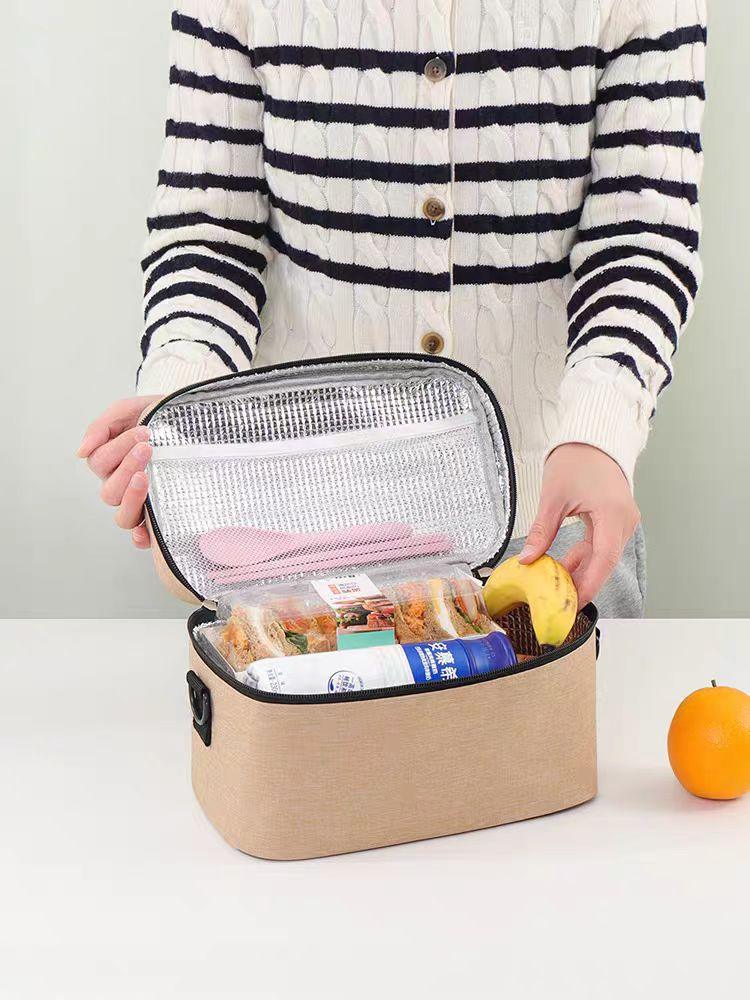
Core Insulation Technologies and Materials
Thermal bag walls consist of three distinct layers: the outer shell, the middle insulation, and the inner lining. Each layer plays a specific role in temperature management. If any of these layers are compromised or made from substandard materials, the entire system fails.
Foam Thickness and Density
Thickness alone does not guarantee performance. Closed-cell foam density directly impacts thermal resistance, acting as the primary barrier against heat transfer. Open-cell foam, like what you find in cheap couch cushions, allows air to pass through. Closed-cell foam traps gas in tiny bubbles, blocking heat transfer.
Foam Type Characteristics Best Use Case PEVA (Polyethylene vinyl acetate) Flexible, non-chlorinated, often used as a waterproof lining combined with foam. Standard daily commutes and office lunches. EVA (Ethylene-vinyl acetate) Highly durable, semi-rigid, excellent impact resistance. Molded bases or lids for crush protection. EPE (Expanded polyethylene) Lightweight, excellent thermal insulation, rigid closed-cell structure. High-performance bags requiring long-term temperature retention. Polyurethane (PU) Foam Extremely dense, superior R-value, heavier than EPE. Extreme environments, multi-day ice retention. Radiant Barrier Linings
The interior lining does more than hold food; it manages radiant heat. Foil and Mylar are common choices. These reflective surfaces work by bouncing radiant heat away from cold items. Conversely, they reflect heat back into warm items. Mylar typically offers superior durability and reflectivity compared to standard aluminum foil linings.
When you open the bag, you want to see a thick, metallic-looking lining. This is the radiant barrier. It works exactly like the reflective sunshades you put in your car windshield. Without it, the foam has to do all the heavy lifting, and your ice packs will melt significantly faster.
Eco-Friendly and Sustainable Materials
Sustainability now plays a major role in material selection. Recycled exterior and interior fabrics, such as RPET (recycled polyethylene terephthalate), perform exceptionally well. When manufactured correctly, RPET matches the durability and thermal efficiency of virgin plastics, offering a responsible choice without sacrificing performance. You can drag an RPET bag across a concrete floor, and it will hold up just as well as standard polyester.
Structural and Exterior Durability Features
Exterior material choices dictate longevity, abrasion resistance, and the overall protection of your contents. A bag that falls apart on the outside is useless, regardless of its internal insulation. If you work in construction, landscaping, or any field environment, the exterior shell takes a beating daily.
Denier Ratings and Fabric Strength
Denier (D) measures fabric thickness and durability. Higher numbers indicate heavier, more rugged yarns. You need to match the denier rating to your daily environment.
- 600D Polyester: The industry standard. It balances weight, durability, and cost effectively for daily office use. It handles tossing in the back seat of a car perfectly fine.
- 900D to 1200D Polyester: A step up in ruggedness. Better puncture resistance if you carry tools or sharp objects nearby.
- Ballistic Nylon: Extremely high durability. Resists tears and heavy abrasion, ideal for harsh environments like job sites where the bag might get scraped against brick or metal.
- Canvas: Offers a classic aesthetic but tends to be heavier and is prone to retaining moisture if not treated with a water-repellent coating.
Crush Protection and Rigidity
Soft-sided, fully collapsible designs save space but offer zero crush protection. If you drop a heavy tool on a soft bag, your lunch is ruined. Semi-rigid molded shells, utilizing molded EVA lids or bases, absorb impacts. Removable hard-plastic internal buckets provide the ultimate defense. They protect soft fruits, sandwiches, and fragile containers from external pressure during transit.
Hardware Evaluation: Zippers, Seams, and Stitching
Zippers are the primary failure point on any bag. Look for branded, heavy-duty zippers like YKK. Closed-track designs are essential because they prevent temperature leakage through the zipper teeth. Additionally, evaluate the load-bearing stitching. Bar tacks at handle attachment points ensure the straps will not tear under the weight of heavy glass containers and ice packs.
A cheap zipper will derail or lose teeth within a few months of daily use. When evaluating a bag, pull the zipper back and forth rapidly. It should feel smooth but offer slight resistance, indicating a tight seal. Look for weather-resistant zipper tape that covers the teeth when closed, blocking air exchange.
Interior Design: Leak-Proofing and Maintenance
Interior construction must prevent cross-contamination and simplify daily cleaning. Spills happen, and your bag must handle them gracefully. A leaked container of soup can ruin your day if the bag lets it seep through to your car seat.
Heat-Welded vs. Stitched Seams
Traditional stitching punctures the waterproof lining. These micro-punctures create escape routes for liquids. Heat-welding fuses the materials together using high frequency or heat. Welded seams are absolutely mandatory for true leak-proofing. If you carry soups or rely on melting ice, stitched seams will eventually leak.
I have seen countless bags thrown away because a stitched seam allowed chicken juice or spilled milk to soak into the foam core. Once organic matter gets into the foam, you cannot clean it out. The bag will smell forever. Heat-welded seams prevent this entirely by creating an impermeable tub inside the bag.
Antimicrobial and Easy-Clean Linings
Food-safe, BPA-free linings are non-negotiable. Look for features that actively prevent mold growth. Seamless corners are critical. Wipeable surfaces that do not trap food particles make daily sanitization fast and effective. You should be able to invert the lining, wipe it down with a sanitizing wipe, and have it dry in minutes.
Capacity, Compartments, and Portability
You must balance the need for maximum capacity against portability and storage footprint. A massive bag is cumbersome, while a tiny bag forces you to leave items behind.
Sizing for Specific Needs
Measure your primary food containers before buying. Compare these dimensions against the bag's internal measurements. Ensure it accommodates standard meal prep containers, bento boxes, and tall hydration bottles while leaving room for ice packs. Do not guess the size. A container that is half an inch too wide will stretch the zippers and eventually break them.
Dual-Compartment and Dry/Wet Separation
Multi-zone bags allow you to separate ambient snacks from refrigerated meals. The trade-off is a slight loss of overall cubic volume due to the internal divider. External dry pockets, whether mesh or zippered, are highly useful. They isolate napkins, utensils, and personal electronics from the condensation generated by the main insulated compartment.
Ergonomics and Weight Distribution
Carrying a fully loaded bag requires good ergonomics. Padded shoulder straps reduce fatigue during long walks from the parking lot to the site. Reinforced top handles offer quick grab-and-go convenience. Modular attachment points, like carabiner loops, allow you to secure the lunch bag to a larger backpack or tool rig.
Environmental Adaptability
Evaluate the bag based on its daily destination. Outdoor environments, such as construction sites or sports meets, demand ruggedized bases and UV-resistant exteriors. A molded rubber bottom prevents water from soaking up into the fabric when you set the bag on wet grass or concrete. Conversely, office commutes prioritize streamlined profiles that fit easily into shared refrigerators or under desks.
Common Pitfalls and Implementation Risks
User errors can easily compromise the performance of even the highest-quality products. Understanding these risks ensures maximum thermal efficiency.
Overpacking and Airflow Restriction
Cramming too many items into the main compartment eliminates cold air circulation. Gel packs require a small amount of ambient air space to function efficiently. Overpacking forces the cold sources to work harder and reduces their effective lifespan. Leave a little room for the cold air to move around the containers.
Condensation Management
Temperature differentials naturally cause exterior sweating and interior moisture buildup. You can mitigate this with proper packing techniques. Wrap condensation-prone items in a paper towel, or utilize dry compartments to keep moisture away from sensitive items. If you use loose ice instead of sealed gel packs, expect heavy condensation.
Improper Cleaning Protocols
Never machine wash bags with rigid foam cores, cardboard structural stiffeners, or welded seams. The agitation and heat will degrade the insulation and destroy the waterproofing. Stick to spot cleaning with mild soap and warm water. Let the bag air dry completely open to prevent mildew.
Conclusion
The most effective thermal carriers prioritize high-density closed-cell foam, welded interior seams, and heavy-duty zippers over exterior aesthetics. By matching the bag's specifications to your daily environment, you ensure reliable performance and longevity.
Follow these next steps to make an informed decision:
- Measure your most frequently used meal prep containers and bento boxes.
- Verify the dimensions of your preferred ice packs to ensure they fit alongside your food.
- Check the product specifications specifically for heat-welded interior seams.
- Assess your daily commute to determine if you need a soft-sided collapsible bag or a semi-rigid crush-proof design.
FAQ
Q: How long does an insulated lunch bag keep food cold?
A: A standard bag provides a 3-to-4 hour baseline of cold retention. You can extend this to 8+ hours by using multiple high-quality ice packs, pre-chilling your food, and selecting a bag with high-density closed-cell EPE foam.
Q: Can an insulated lunch bag keep food hot?
A: Yes, through passive heat retention. You must pre-heat your containers with boiling water before adding food. Even with dense insulation, the realistic limit for keeping food safely hot is generally 2-to-3 hours.
Q: Are insulated lunch bags machine washable?
A: No. Most should only be spot-cleaned. Machine washing ruins welded seams, breaks down closed-cell foam, and destroys any rigid structural inserts. Always wipe the interior with mild soap and a damp cloth.
Q: What is the difference between PEVA and foil lining?
A: PEVA is a flexible, waterproof plastic alternative that offers excellent leak resistance and easy cleaning. Foil or Mylar linings provide superior radiant heat reflection, bouncing temperature back toward the food rather than absorbing it.
Q: How many ice packs should I use in my lunch bag?
A: The USDA recommends using at least two cold sources. Place one ice pack at the bottom of the bag and one on top of the perishable items to ensure even temperature distribution.
Q: Why does my insulated lunch bag leak?
A: Leaks usually occur because the bag uses stitched interior seams. Needles create micro-punctures in the waterproof lining. To prevent leaks from melted ice or condensation, you must use a bag with heat-welded seams.
Q: How can I protect delicate foods from getting crushed in my lunch bag?
A: Choose a bag with semi-rigid molded EVA exteriors or look for models that include a removable hard plastic interior liner. These structural elements absorb external pressure, protecting soft fruits and sandwiches.