-
- Picnic BlanketBeach TowelBeach BagBeach Chair CoverTable Cloth CoverBeach MatCamping MatLunch BagHammockCamping Chair
-
In-depth review of the most popular insulated lunch bags.
Views: 0 Author: Site Editor Publish Time: 2026-07-07 Origin: Site


Packing a daily meal often ends in frustration when you open your container to find lukewarm perishables, condensation leaks, and crushed sandwiches. The core problem is identifying an insulated lunch bag that genuinely maintains safe food temperatures below 40°F for more than six hours. It needs to achieve this thermal baseline without introducing excessive bulk, harboring mold in the seams, or suffering premature hardware failure on the zippers. We conducted an objective, data-driven evaluation of the most popular lunch bag architectures available today. By analyzing thermal retention properties, material durability under stress, and daily usability in real-world transit environments, we determine which models actually deliver on their promises and protect your food during the commute.
Key Takeaways
- Thermal Performance Requires Synergy: Baseline insulation is insufficient for long commutes; maintaining safe temperatures requires a strategic combination of high-density foam, reflective lining, and correctly sized ice packs (or built-in freezable gel walls).
- Hardware is the Primary Failure Point: Long-term durability is dictated less by the exterior fabric and more by zipper quality (e.g., YKK), closure mechanism security, reinforced stitching at stress points, and leak-proof, heat-welded interior seams.
- Material Dictates Maintenance: Interior lining materials determine cleaning ease and mold resistance—TPU-coated nylon and seamless PEVA significantly outperform traditional stitched foil linings.
- Volume vs. Usable Capacity: Overall liter capacity is a misleading metric; a bag's true utility depends on its interior dimensions aligning with your specific food storage containers and the inclusion of smart internal organization (like mesh netting).
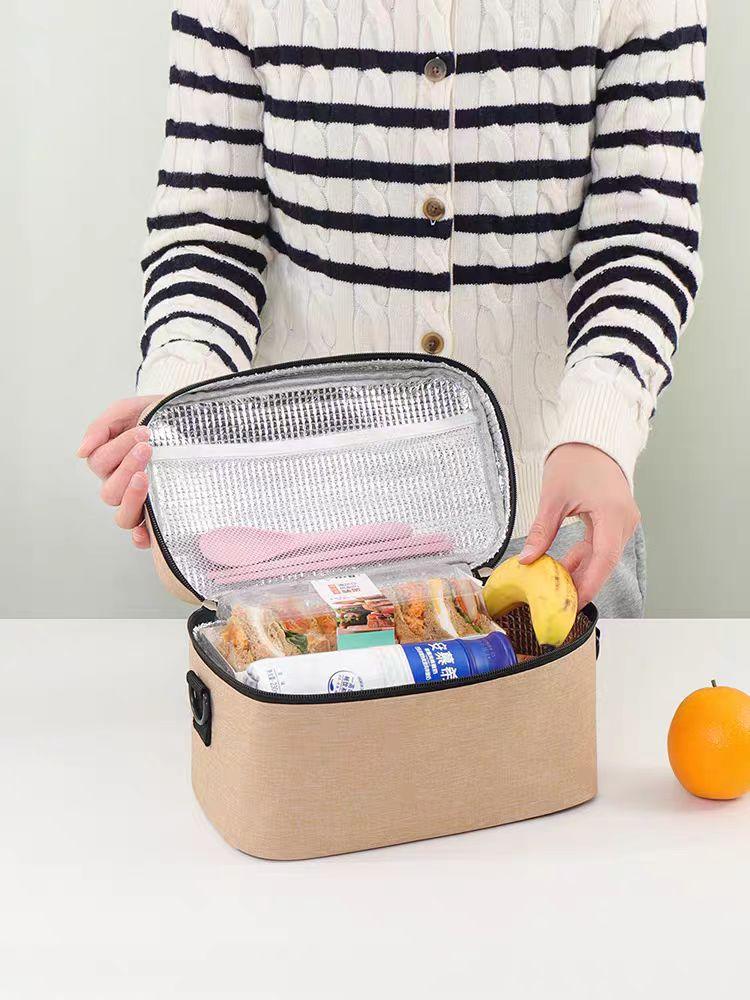
Success Criteria: What Defines a High-Performance Insulated Lunch Bag?
Evaluating an insulated lunch bag requires looking past exterior aesthetics and marketing claims. Performance relies on strict thermal standards and structural reliability. We assess bags based on how well they handle real-world transit environments, from hot car trunks to crowded subway commutes.
Thermal Retention Standards
Food safety is the primary metric for any cooler or lunch container. We evaluate bags against FDA food safety guidelines, which dictate that high-risk perishables like dairy, yogurt, and meats must stay out of the "Danger Zone" of 40°F to 140°F. A reliable bag combined with an appropriately sized ice pack should hold internal temperatures below 40°F for at least six hours in a standard 72°F room-temperature environment. Bags utilizing high-density closed-cell foam typically achieve this benchmark consistently, whereas thin open-cell foam variants fail within three hours.
Structural Integrity and Crush Resistance
Your lunch rarely travels alone. The bag's chassis must protect delicate items like soft fruits, chips, or glass meal prep containers. We look at how well the structure holds up in crowded backpacks, tight locker spaces, or busy transit environments. Rigid foam walls offer superior protection compared to thin, flexible fabrics. A bag that collapses under the weight of a textbook will inevitably result in ruined meals, regardless of its thermal properties.
Closure System Security and Seal Integrity
Insulation is useless if the bag does not seal properly. We assess how well the bag traps cold air and prevents ambient heat intrusion. Zippers, roll-tops, and flaps are tested against accidental opening. Weak magnetic or velcro closures often flop open during movement or when the bag is slightly overpacked. This instantly compromises thermal performance and allows warm air to enter. Heavy-duty, weather-resistant zippers with overlapping fabric guards provide the most reliable thermal seal.
Internal Organization and Storage Architecture
A large empty cavity often leads to crushed food and disorganized contents. We evaluate the presence of internal organization systems. Mesh pockets, elastic bands, or netting are essential components. They separate heavy utensils, napkins, and hard ice packs from delicate food containers. Proper internal architecture prevents a heavy ice pack from sliding around and smashing a sandwich during transit.
Usability and Maintenance
Daily use requires easy cleaning protocols. We assess wipeability, drying time, and odor resistance. Carrying ergonomics also matter significantly for daily commuters. We look at the comfort of top handles, the adjustability of shoulder straps, and the presence of modular attachment points like carabiner loops for clipping onto backpacks or work belts.
Categorizing Insulated Lunch Bags: Which Architecture Fits Your Needs?
Lunch bags fall into distinct architectural categories based on their construction methods and intended use cases. Each design approach offers specific trade-offs between thermal retention, weight, and structural protection.
Architecture Type Primary Materials Thermal Retention Best Use Case Soft-Sided Compressible Neoprene, Quilted Nylon Low to Moderate (2-4 hours) Short commutes, office refrigerators Semi-Rigid Structured Closed-Cell Foam, Hard Shells High (6-8+ hours) Job sites, outdoor work, long transit Built-In Freezable Gel Canvas, Integrated Gel Packs High (Active cooling) Users who dislike loose ice packs Multi-Compartment Mixed Foam, Polyester Moderate to High Full-day meal prep, shift workers Soft-Sided and Compressible
These bags typically use neoprene, nylon, or puffer-style quilting. They are lightweight and highly flexible. You can pack them flat when empty, making them highly convenient for storage. However, they generally offer lower thermal retention due to thinner insulation layers. They provide zero structural protection for delicate contents. This style is ideal for short office commutes or school lockers where heavy impacts are unlikely and the bag will be transferred to a refrigerator quickly.
Semi-Rigid Structured Bags
These models feature thick foam insulation encased in a rigid or semi-rigid shell. They offer superior crush protection and excellent insulation. The main trade-off is the physical footprint. A semi-rigid bag carries a bulky, inflexible shape regardless of whether it is full or empty. This makes it difficult to stuff into a crowded backpack, often requiring it to be carried separately by its top handle.
Built-In Freezable Gel Bags
These bags have walls lined with freezable gel, eliminating the need for loose ice packs. They provide 360-degree cooling for the contents, chilling room-temperature items rapidly. However, they are heavy even when empty. They also require dedicated freezer space overnight and can generate significant internal condensation as the gel thaws throughout the day.
Multi-Compartment and Dual-Zone Bags
These bags feature separate isolated chambers. You can store hot and cold items separately, or keep food away from dry gear like phones and keys. They offer high capacity for long shifts or family outings. The downside is complexity. Multiple zippers and seams increase potential leak areas and hardware failure points, and the overall size can be cumbersome for a single meal.
In-Depth Evaluation of Popular Insulated Lunch Bag Models
We examined several popular models to see how different architectures perform in daily use. We looked at high-end rigid options, soft-sided designs, and specialized cooling bags to determine their practical value.
The High-End Semi-Rigid Standard
Models representing the premium semi-rigid category achieve maximum insulation via thick, closed-cell foam and a hard outer shell. They excel in crush protection, ensuring delicate items survive rough handling. Cleaning is easy due to seamless, molded interiors that prevent food from getting trapped in corners. They often feature integrated interior elastic netting to secure utensils or ice packs against the lid. The premium price point is justified by longevity and superior thermal performance. However, the inflexible footprint makes it difficult to pack inside a standard work backpack, forcing you to carry it by hand.
The Puffy Soft-Sided Contender
Bags utilizing quilted ripstop nylon insulation provide surprisingly effective short-term cooling. They are highly compressible, machine washable, and exceptionally lightweight. Real-world testing shows outstanding performance keeping temperature-sensitive items like yogurt chilled for a few hours compared to bulkier lunch boxes. They are best for short commutes and climate-controlled environments. They lack structural protection, making sandwiches prone to getting squished if placed at the bottom of a larger bag.
The Dual-Compartment Workhorse
High-capacity, multi-zone storage models are designed for full-day meal prep, shift work, or family outdoor use. They are highly practical for separating hot and cold items, utilizing distinct thermal zones. The dual zones prevent container stacking issues, allowing you to keep heavy glass bowls on the bottom and lighter snacks on top. They offer an excellent cost-to-capacity ratio. However, the sheer size is often overkill for standard single-meal users, and the extra zippers introduce more potential failure points.
The Built-In Insulation Model
Bags featuring active cooling walls act as a continuous ice pack. They eliminate the frustration of trying to fit awkwardly shaped ice blocks around your food containers. They cool room-temperature items rapidly and maintain safe temperatures for extended periods. However, the added weight and the strict requirement to freeze the entire bag daily introduces friction into the user routine. Models with simple fold-over velcro flaps can occasionally flop open if overpacked, compromising the thermal seal and allowing cold air to escape.
Evaluation Dimensions: Features-to-Outcomes Analysis
Understanding the specific components of a lunch bag helps predict its long-term performance. We analyze insulation thickness, lining materials, and hardware durability to separate high-quality gear from disposable products.
Insulation Thickness vs. Interior Volume
There is an inherent trade-off in lunch bag design. Thicker, more effective insulation reduces usable interior space. We call this the "thickness penalty." A bag might look large on the outside but barely fit a standard meal prep container on the inside due to two-inch thick foam walls. Always check interior dimensions, not just exterior measurements, to ensure your specific containers will fit alongside an ice pack.
Interior Lining Materials
The interior lining dictates how easily you can clean the bag and how well it resists leaks. Stitched seams are notorious for trapping bacteria and leaking condensation.
- PEVA: Moderate durability. Flexible but can puncture with sharp utensils. Easy to wipe clean and resists stains well. High leak resistance, especially if seams are heat-welded.
- Aluminum Foil: Low durability. Prone to tearing and flaking over time. Difficult to clean because food gets trapped in stitched seams. Low leak resistance; stitched seams often leak condensation onto your car seat.
- TPU-Coated Nylon: High durability. Premium puncture resistance. Very easy to clean; the smooth surface wipes down instantly. Maximum leak resistance, usually featuring seamless or welded construction.
Hardware and Closure Dynamics
Cheap zippers derail under tension. When you overpack a bag, the zipper teeth separate, ruining the bag permanently. Heavy-duty zipper tracks prevent warm air intrusion and handle daily stress without separating. Magnetic and velcro flaps are convenient for quick access but often fail to create an airtight seal, allowing cold air to escape rapidly and reducing the bag's effective cooling time.
Load Bearing and Stress Points
Carrying heavy glass meal-prep containers puts immense stress on the bag's handles. Look for bar-tack stitching on carrying handles and shoulder strap D-rings. Reinforced stitching prevents the handles from tearing away from the main body under heavy loads. A bag with single-stitched handles will inevitably fail if you regularly pack dense foods and large ice packs.
Implementation Risks and Mitigation
Even the best bags degrade if not maintained properly. Understanding common failure points allows you to extend the lifespan of your lunch bag and maintain food safety standards.
Mold and Mildew Proliferation
Moisture from condensation or spills often gets trapped in stitched seams. This dark, damp environment breeds mold rapidly. To mitigate this risk, prioritize bags with heat-welded, seamless interiors. Enforce strict air-drying protocols. Always leave the bag open to dry completely after wiping it down; never zip a damp bag shut and throw it in a closet.
Odor Retention
Porous materials absorb food smells over time. A bag can quickly develop a permanent odor from spilled soup or forgotten fruit. Mitigate this by utilizing baking soda soaks for stubborn smells. Avoid buying bags with exposed fabric on the interior, as fabric absorbs spills instantly and is nearly impossible to fully sanitize without machine washing.
Zipper Derailment and Flap Failures
Overpacking rigid containers causes zipper teeth to separate under pressure. Weak velcro flaps give way during transit, spilling contents. To prevent this, measure your primary food containers before purchase. Ensure a minimum of 0.5 inches of clearance on all sides. Choose secure zipper closures over standard magnetic flaps for daily commutes to ensure the bag stays shut even if dropped.
Conclusion
To ensure your food remains safe and your containers stay intact, follow these actionable steps before making a final selection:
- Measure the length, width, and height of your most frequently used food containers.
- Compare your container measurements strictly against the interior dimensions of the bag, ignoring exterior bulk.
- Add at least one inch of clearance to your measurements to accommodate a hard ice pack and internal mesh netting.
- Inspect the product specifications to confirm the interior lining utilizes heat-welded seams rather than standard stitching to prevent leaks.
FAQ
Q: How long does an insulated lunch bag actually keep food cold?
A: A quality bag with high-density foam and a properly sized ice pack can keep food below 40°F for 6 to 8 hours. Soft-sided bags without ice packs may only maintain safe temperatures for 2 to 3 hours depending on ambient heat.
Q: Do you need to use ice packs in an insulated lunch bag?
A: Yes. Insulation only slows the transfer of heat; it does not generate cold. To keep perishable food safe for several hours, you must include a frozen ice pack or use a bag with built-in freezable gel walls.
Q: Can you put an insulated lunch bag in the washing machine?
A: It depends on the material. Soft-sided nylon or neoprene bags are often machine washable. Semi-rigid bags or those with rigid foam insulation should only be hand-washed or wiped down to prevent structural damage.
Q: How do you clean a smelly or moldy insulated lunch bag?
A: Wipe the interior with a mixture of warm water and mild dish soap. For stubborn odors or mold, create a paste of baking soda and water, apply it to the affected areas, let it sit for 20 minutes, then wipe clean and air dry completely.
Q: What is the safest and most durable material for the inside of a lunch bag?
A: TPU-coated nylon and seamless PEVA are the best options. They are highly durable, puncture-resistant, easy to wipe clean, and do not trap food particles like stitched aluminum foil linings do.
Q: Why does my insulated lunch bag sweat or leak condensation?
A: Condensation occurs when warm outside air meets the cold exterior of the bag. If the bag leaks water, it usually means the interior lining has stitched seams rather than heat-welded seams, allowing melting ice pack condensation to seep through.